
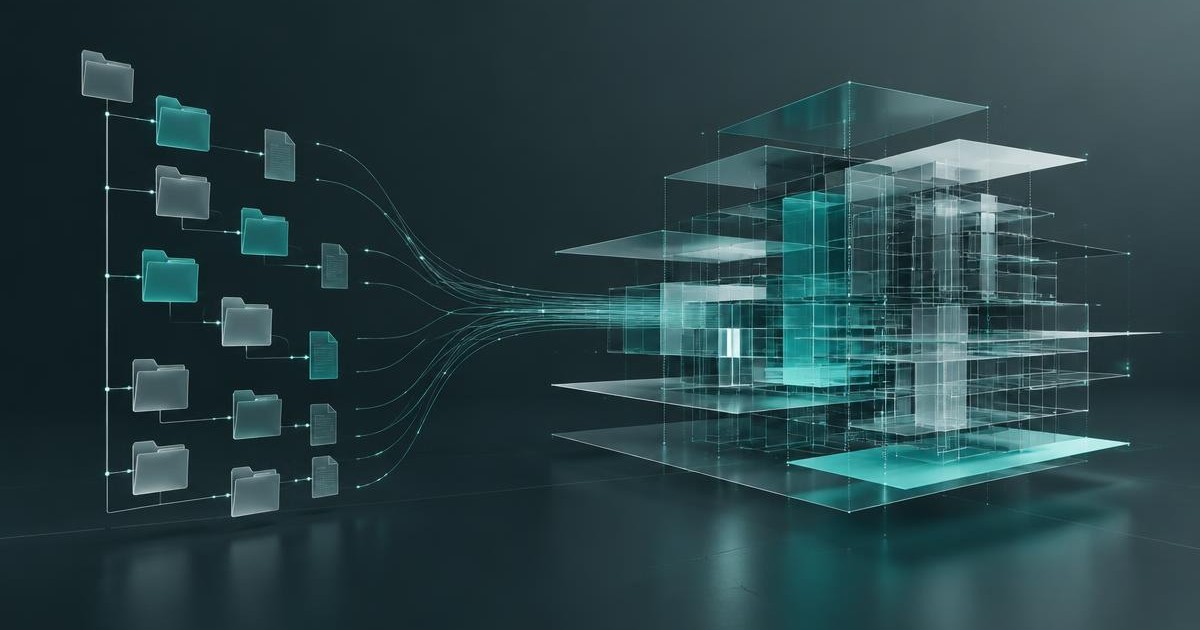
Most owner-side ACC implementations do not fail because of Autodesk Construction Cloud. They fail because somebody configured a hub, copied it into a template, sent an invoice and left. Eighteen months later the owner has a pilot project with well over a thousand issues nobody can filter, a folder tree that cannot be handed over to the operational document management system, and no written requirement for what a 3D model should contain. This article is about the part that consultants skip: the process, the requirements and the person in the room. A working setup needs four things, in this order: written information requirements, an ACC configuration built around them, a handover designed on day one, and templates the supply chain will actually use.
Why ACC rollouts stall at owners
An architecture or engineering firm adopts ACC for itself. An owner adopts it for all the other project participants: internal project managers, external engineers, contractors on site, and the facilities managers who will live with the output for 25 years. That changes the job completely.
Five things stall the rollout, and none of them is a software limitation. It is a change management job that happens to come with a licence.
Nobody owns the requirements. The owner has a contractual information requirements document for 2D deliverables, because P&IDs and single-line diagrams are what operations needs. For the model, there is nothing: no parameter list, no naming rule, no level of detail defined per stage of design development. Engineers deliver what they always deliver, and the owner finds out at handover.
Consultants configure from outside the room. An ACC implementation partner is rarely invited to the owner's internal project meetings. They configure what the project manager tells them, the project manager does not know the process, so the consultant guesses, bills the hours and moves on. We have seen hubs where the global template was cloned from a pilot that had never been tested with real users.
Security and mandates block the useful work. Opening the Developer Hub, connecting ERP or ticketing tools, bulk-exporting a project: each needs a mandate from IT and management. A BIM manager cannot grant that mandate on their own. The integration roadmap on the slide stays a slide.
Templates are made too early. A project template with roles, folders and permissions is a good idea, but create it only after one live BIM project has run through it. Templating a configuration that has never been implemented on a real project means every new project inherits the same mistakes, and in ACC some settings cannot be changed once issues and documents exist.
Handover is designed last. The whole reason an owner chooses ACC over a lighter field tool is often that the output must land in an operational document management system: for example Meridian, Aconex, SharePoint or a legacy archive. If the folder structure and metadata are not designed for that move on day one, the export is a manual, multi-week exercise with network timeouts and missing files.
What a working common data environment (CDE) contains for an owner
ISO 19650 defines the common data environment as the agreed source of information for a project. Without governance it becomes an expensive file dump. A common data environment setup for an owner has four layers. Skip one and the other three leak.
1. Define information requirements and the BIM execution plan first
This is the ISO 19650 information management work that nobody budgets for. Exchange information requirements (EIR) describe the information required, by whom and at which stage. A BIM execution plan (BEP) template sets out how appointed parties develop their response. The pre-contract BEP shows how a bidder intends to meet the EIR; the post-contract BEP confirms the supply chain's capabilities, roles, responsibilities, milestones and agreed targets for information delivery and handover. Behind the BEP sit a task information delivery plan (TIDP) for each team and the master information delivery plan (MIDP) that rolls them up into one programme the owner can manage. Add a parameter and naming standard that survives the handover, data quality rules that someone actually checks, and a review and acceptance process that people will follow.
Write it before anyone touches the platform settings, in the owner's language, tied to the owner's own standards rather than a national guideline pasted in whole. The subject matter experts who know what operations needs from the built asset (maintenance, safety, quality) should sign off the asset information requirements, not only the BIM team.
2. ACC configuration that follows the process, not the module list
Autodesk Docs folder structure first: WIP, Shared, Published and Archived states, plus the internal folders the appointed parties never see. Only Published information is used for construction, which is what ends arguments about which version is current. Then roles and permissions mapped to the contract structure, with role-based access so every company in the supply chain has clear responsibilities for what it uploads, reviews and publishes. Then an ACC issues workflow with custom fields set before the first issue is raised, because once a thousand issues are in the hub, you cannot add the discipline field retroactively.
Reviews only where a real sign-off is needed; stamps on exported PDFs where a signature workflow is overkill. Design Collaboration and Model Coordination set up per discipline, with automatic clash detection, so project teams do their design coordination on the federated model rather than in email threads. Insight dashboards configured around the questions management actually asks: progress against the MIDP, open issues and risks per company, and who is responsible for what is late.
Modules can be run simply or in depth. Complexity should follow what the project scope needs, not what the licence includes.
3. Asset information handover designed on day one
If the destination is an operational document management system, its numbering, metadata and import format decide the ACC configuration, not the other way round. We design the CDE handover first, test an export on week two, and build the project around what survives the move. The project information model only becomes a usable asset information model if its metadata was planned for that move from the start.
4. Content the appointed parties can use
A Revit template for owners is not a design template with a logo on it. It carries the owner's shared parameters, families and view templates, and makes the standard the path of least resistance. Engineers follow the standard when they can rely on the template to do it for them.
The same applies to training. Short, role-based sessions on the live project beat a two-day generic course that nobody remembers by the next design review. Name a champion in each project team, measure adoption on the pilot, and refine the template before it goes to the next project.
An anonymous case: multiple projects, one information manager
An international owner of mission-critical industrial facilities engaged us to run information management across several concurrent capital projects in Europe. Each project had its own design team, its own contractors and, at the start, its own interpretation of what a model deliverable should be.
What we found: a data-management setup used mostly as a file share, document transmittals that depended on one person pressing a button, review workflows that stalled because the approver never had time, and client-side stakeholders without Autodesk accounts who were expected to comment on models they could not open.
What we built:
- An EIR and BEP structure shared across projects, with the project-specific parts kept deliberately small.
- Autodesk Docs configured with a folder and permission structure tested on one project before being templated for the others.
- Bridge-based sharing between hubs so MEP teams receive architectural models the moment they are published, without waiting for a transmittal.
- A client review portal outside ACC (SharePoint plus a Speckle dashboard) for stakeholders without Autodesk licences, with a one-page guide on how to comment.
- Review and approval steps cut back to the ones somebody would actually perform.
- A Revit template and content library for the design teams, maintained by our Polish production team.
What changed: the owner's project managers stopped acting as document controllers, coordination moved from email to one federated model with a dashboard management could read, and new projects start from a template that has already survived a real one.
We do this work white label. The owner's name stays off our website, and often our name stays off the deliverables. That is the deal.
How to buy it
There are two ways to get an ACC implementation done.
A consultancy configures the hub to a brief, runs one round of training and leaves. That is the industry default, and it works when the owner already has a mature BIM function with the capabilities to write the brief. Most owners do not, which is why they are hiring.
The alternative is BIM manager outsourcing in the real sense: an information manager embedded with the owner on a retainer, sitting in the internal project meetings, writing and maintaining the requirements, configuring ACC as the process matures, supporting the project teams through their first handover, and acting as the single point of contact for every appointed party. Behind that person sits a production team for the volume work: Revit templates, information modelling, coordination, scan-to-BIM. It scales with peak workloads, so the owner adds capacity without recruiting and training an in-house team. Slefty's team in Poland delivers that production capacity at European senior-engineer quality, overnight where it matters, under ISO 19650. The expertise sits in the room; the volume sits in Poland.
For the people who will never hold an Autodesk licence (facilities managers, management, client-side reviewers), we add Conpass, our browser-based model viewer. They open the federated model from a link and comment on it, with no Revit, no licence and no BIM manager on their side.
The second model costs more per month and far less per project, because the owner is not paying twice: once for the configuration and again to fix what the configuration did to the next project. Treat it as a risk management decision rather than a technology purchase. The platform is the cheap part. Subscriptions, training and data migration are the visible costs. The real cost sits in rework, late handover and a project delivery team that has stopped trusting the data.
FAQ
What does an ACC implementation partner do that an internal BIM manager cannot?
Nothing, if the internal BIM manager has the mandate and the hours. In practice they have neither, because they are also closing pilots, onboarding contractors and answering to the business for a budget. We take the structural work off their desk so they keep the strategic role.
How long does a common data environment setup take for an owner?
A tested, templatable configuration for one project type takes one full project cycle. The first usable version for a pilot takes four to six weeks, provided the requirements layer is written in parallel.
Do we need ISO 19650 information management if our projects are in Denmark, Germany or France?
You need a requirements layer. ISO 19650 is the vocabulary most international appointed parties already speak, and it maps cleanly onto national frameworks such as IKT in Denmark. The standard is not a legal requirement in itself; your appointment documents make it binding. We write to the standard your contracts use.
Can you build our Revit template without access to our ACC hub?
Yes. Requirements, the BIM execution plan template, parameter standards and Revit templates are delivered as documents and files. Only the live configuration work needs hub access, and that can wait for the IT mandate.
Book a 30-minute setup review
Bring your folder structure and your issues export. We will tell you what survives handover.
Book a call